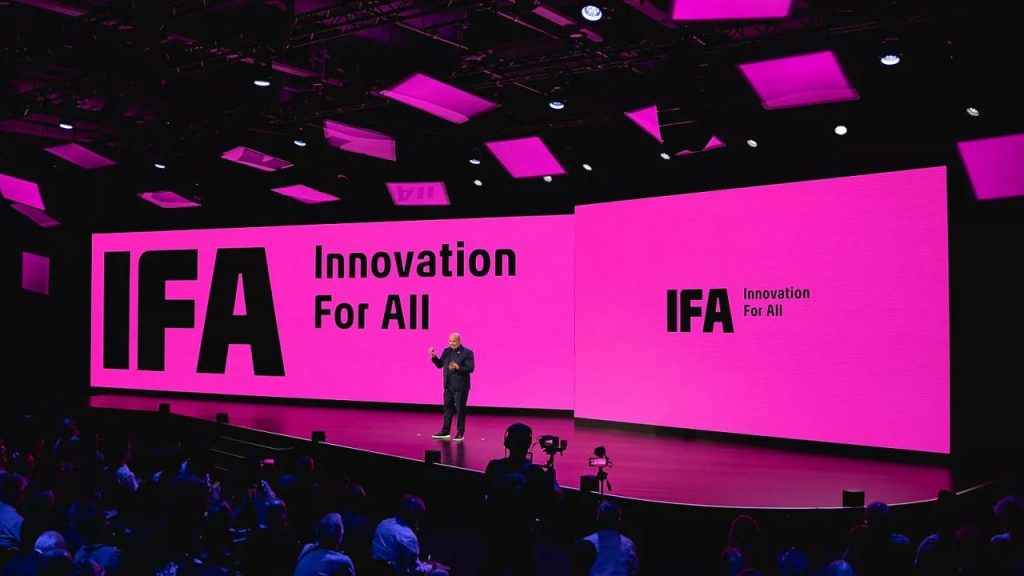
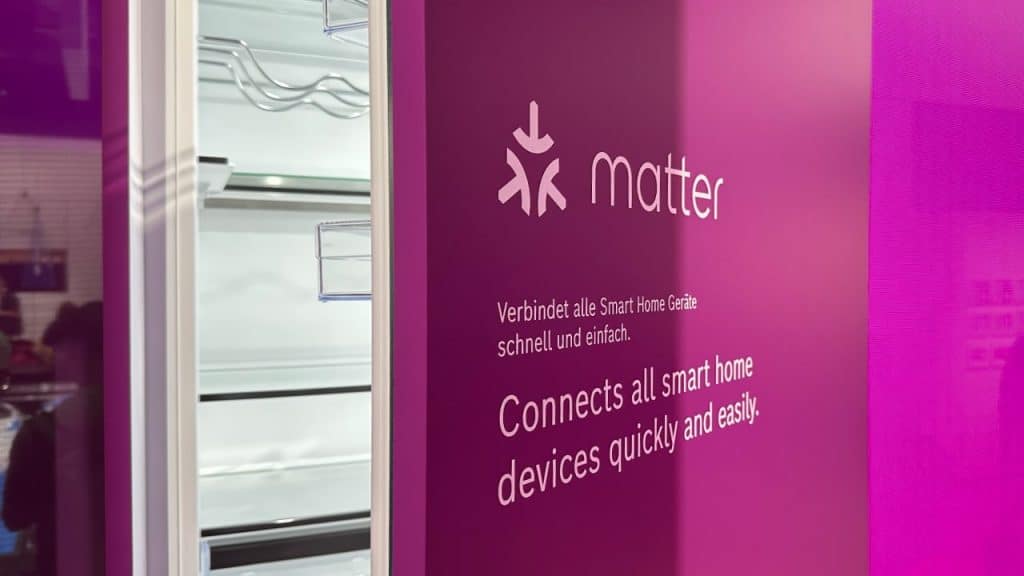
A company representative told me in Berlin that “the wind has probably gone out of Matter’s sails.” That impression could arise when looking at the traditional IFA brands. Bosch Home Appliances – a staunch advocate of the Matter-capable refrigerator in 2025 – barely mentioned the standard at all this year. And instead of the still-pending +M versions of its smoke detector, wall thermostat and other products, Bosch Smart Home presented new service subscriptions at the show.
LG apparently has no plans to launch its ThinQ ON Hub from last year’s IFA outside Korea. Internationally, the task of building a cross-manufacturer ecosystem has been left to its Dutch subsidiary Athom and its Homey platform (link).
Samsung stayed well clear of the exhibition halls altogether and presented its products to a trade audience at a venue in the city center. As expected, AI features were the main focus. The company’s SmartThings platform is now mentioned only as a feature – even though Samsung continues to drive the implementation of Matter forward. The ecosystem’s hubs are regularly among the first to support new versions of the cross-manufacturer standard.
Matter over Thread: The Wave Is Rolling In
Turning away from the major corporations and looking at the smart home specialists reveals a different picture. Signify, the company behind Philips Hue (link), unveiled a dazzling array of new products for IFA: around two dozen new light fixtures, LED strips and string lights, including tube-shaped lights (“Liane”), linear ones (“Signe”) and mesh-like designs (“Festavia”). And all of them are equipped with Silicon Labs’ new wireless chip.
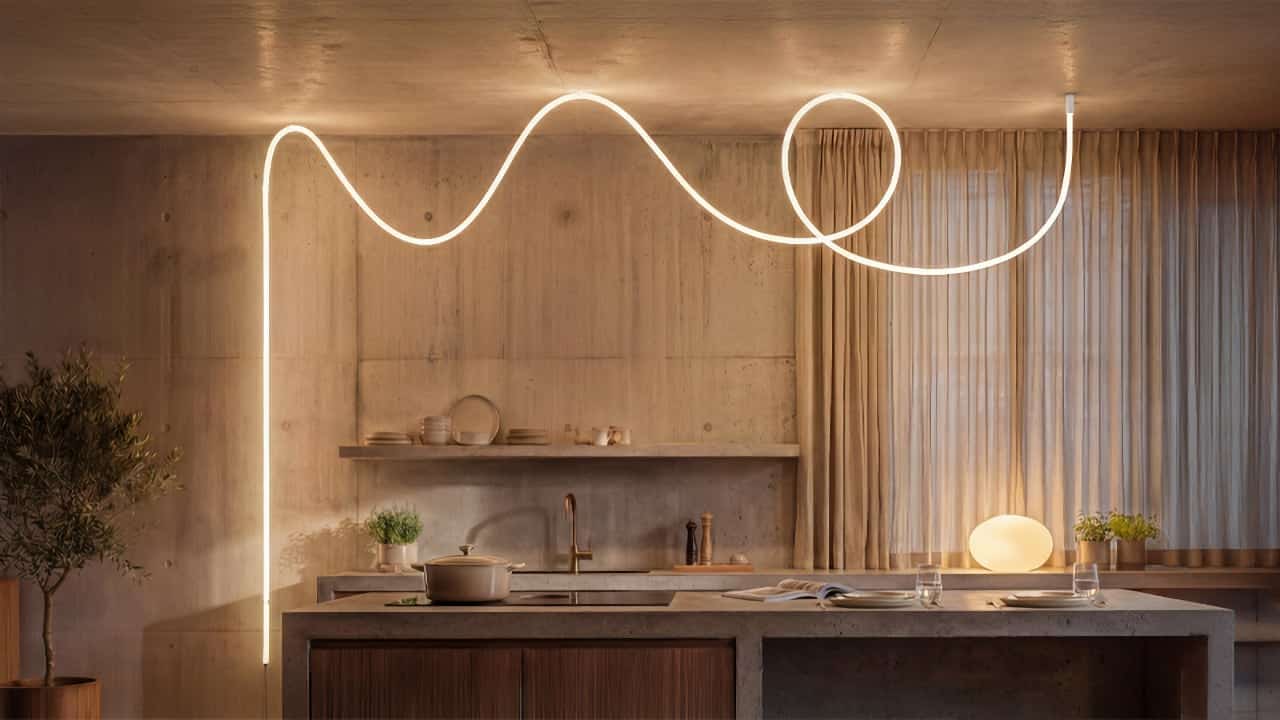
What that means: In addition to Zigbee, the new Hue products support the Thread wireless protocol. They can be integrated into Matter systems conventionally via bridge – in which case all the features of the Hue system, such as gradual color transitions, remain available – or directly via Matter over Thread. Multi-protocol capability will become standard in the manufacturer’s mains-powered products, George Yianni, Technical Director for Philips Hue at Signify, explained to me.
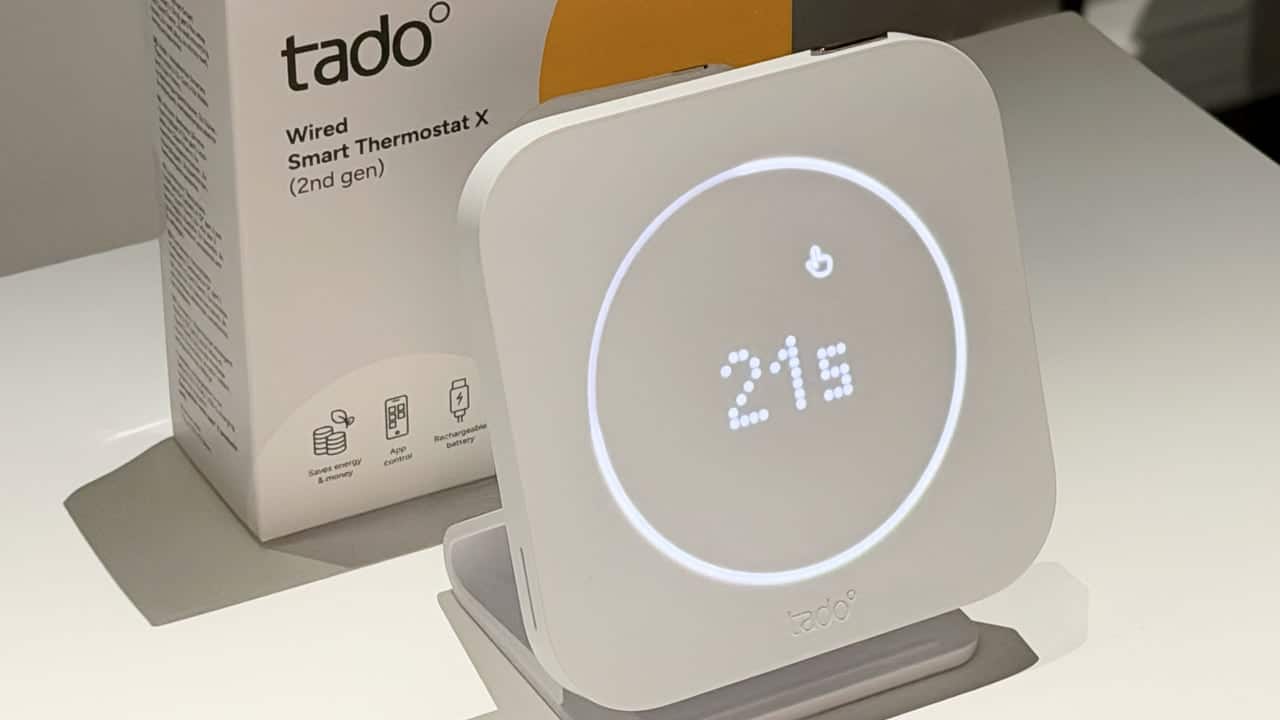
Tado (link) unveiled an updated version of its Smart Thermostat X just in time for the show. Like its predecessor, the second generation uses Matter over Thread. Aqara (link) brought new lights and light bulbs to Berlin: From the T1 Floor Lamp, with its rod-shaped design, to the T2 Downlights and the H1 Outdoor String Lights, all support the Thread protocol. The same applies to the manufacturer’s new U250 Smart Lock, a cylinder-shaped door-lock actuator reminiscent of the silver Nuki Pro, which supports the Aliro standard and comes with a keypad.
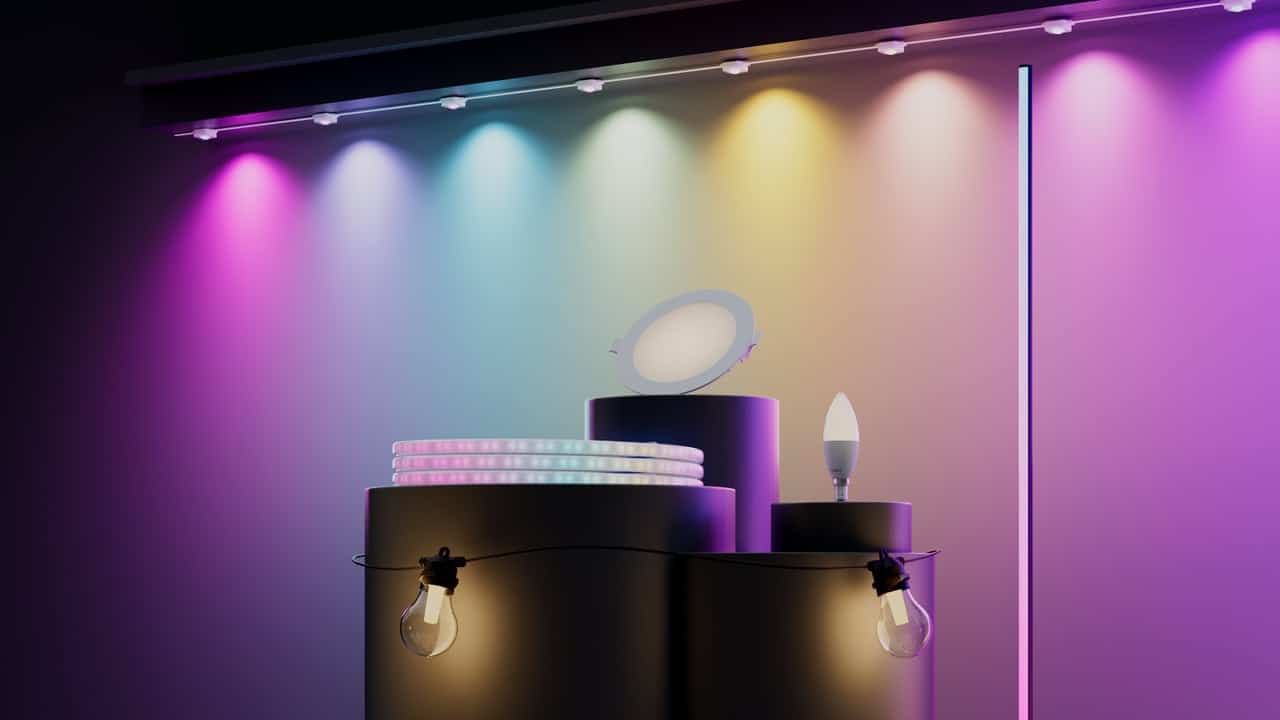
Govee (link), Yeelight (link) and ThirdReality (link) have also expanded their Thread portfolios. ThirdReality has even ventured into a new product category: The first Matter-capable soil-moisture sensor from the company is scheduled to launch in early 2027. Heiman (link) presented, among other things, a temperature and humidity sensor with an NFC chip for Near Field Communication. As provided for in Matter 1.6, it can be commissioned by tapping it with an NFC-enabled smartphone.
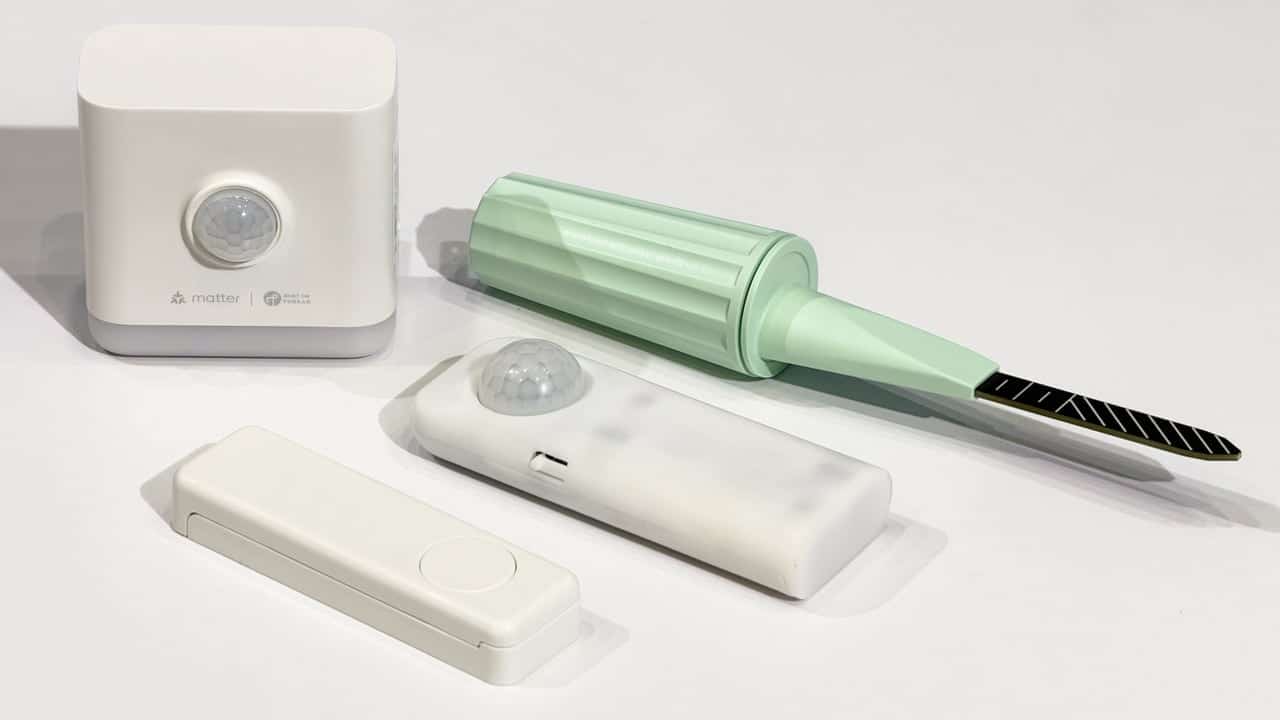
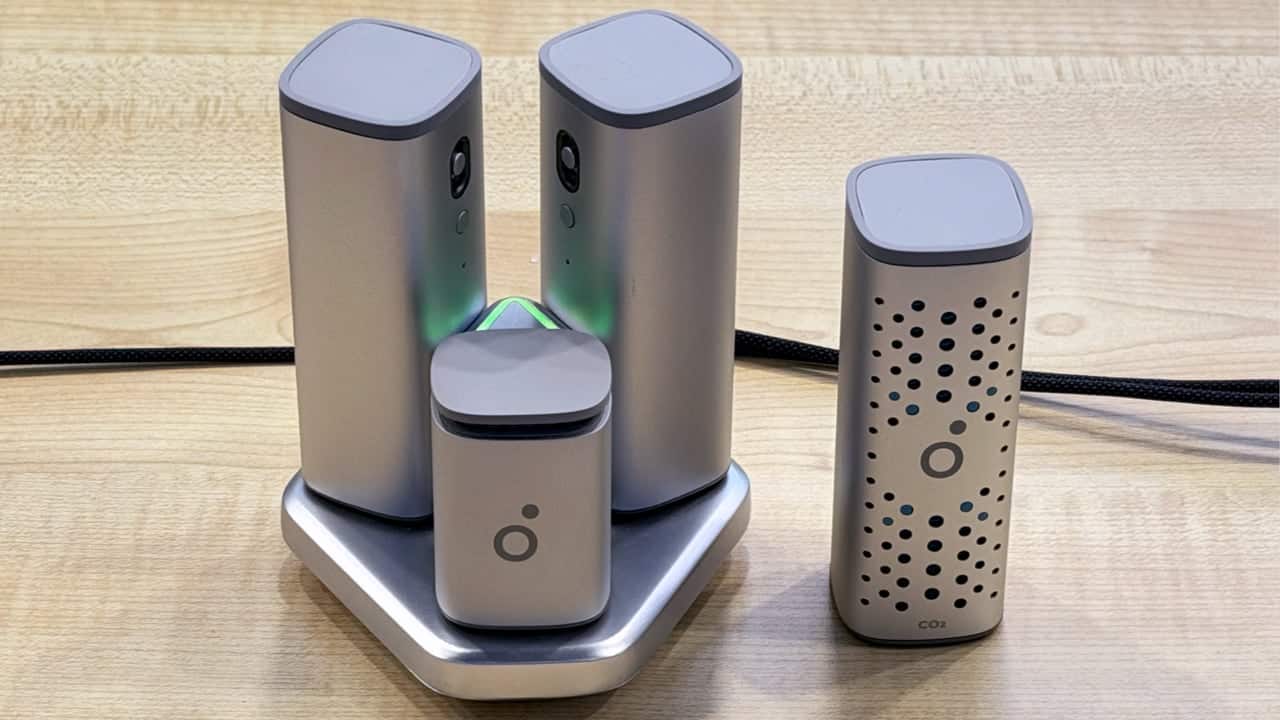
New Matter over Thread products were also on display from Sonoff (link), including a smart lock, motion sensor, and contact sensor. Sensero presented its Airo air sensors, which were unveiled at CES, with a Thread Border Router. The modular set can now be preordered (link). Planned delivery: fourth quarter of 2026. The product earned an accolade from the “IFA Innovation Award” jury – one of many certificates awarded to Chinese companies (link).
Shelly (link) stood out as one of the few European beacons in the Asian-dominated Hall 1.2 with its towering booth. The Bulgarian company had long been skeptical about Thread. However, the change in attitude had already become apparent. In Berlin, the company now made it official: Fourth-generation products will receive a firmware update that allows users to switch the devices from Wi-Fi to Thread. Because not only Matter but also all TCP/IP traffic will be handled via the mesh protocol, manufacturer features such as the Shelly Cloud and Shelly API are expected to remain available. The Bulgarians call their solution “ThreadLink.”
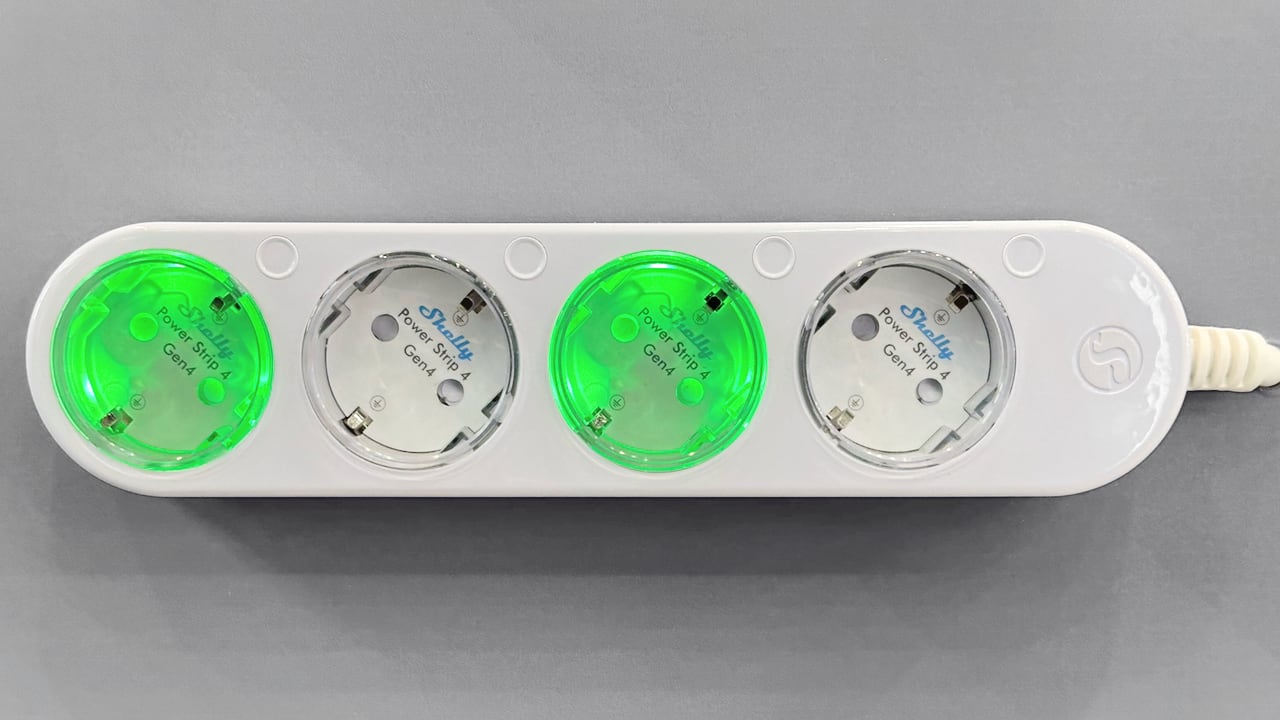
The rollout of the free update will begin later this year. Among the first products to benefit will be the PowerStrip 4 Gen4 and bestsellers such as the Shelly 1/1PM Gen4. There is no requirement to install the update, by the way: The firmware will be offered as a separate, optional installation. “Customers decide for each device whether they want to use the standard Wi-Fi firmware or ThreadLink,” the manufacturer explains.
And as if to further reinforce its commitment to Matter, the company announced a second update: Shelly’s wall displays (X1i, X2i, XL, U1, S1, S2 and XT) will also receive firmware that makes them Matter-compatible. Once upgraded, they will function as Matter Controllers capable of setting up and controlling other devices using the cross-manufacturer standard. Their built-in room thermostat retains its functionality. If needed, it can be integrated as a Matter end device into other ecosystems such as Apple Home or Home Assistant and controlled from there.
China as a Driver of Technology
If it hasn’t become apparent by now: This article mentions Chinese manufacturers with striking frequency. This is due in no small part to the fact that large segments of the consumer electronics industry are now in Chinese hands. Where brands like Loewe, Grundig, and Sony once occupied entire IFA halls, Dreame, Haier, Midea, Xiaomi, and others have now taken over the exhibition space. Even TV brands that may seem familiar to Europeans – Metz, Panasonic, Philips and Sharp – now belong to companies from China.
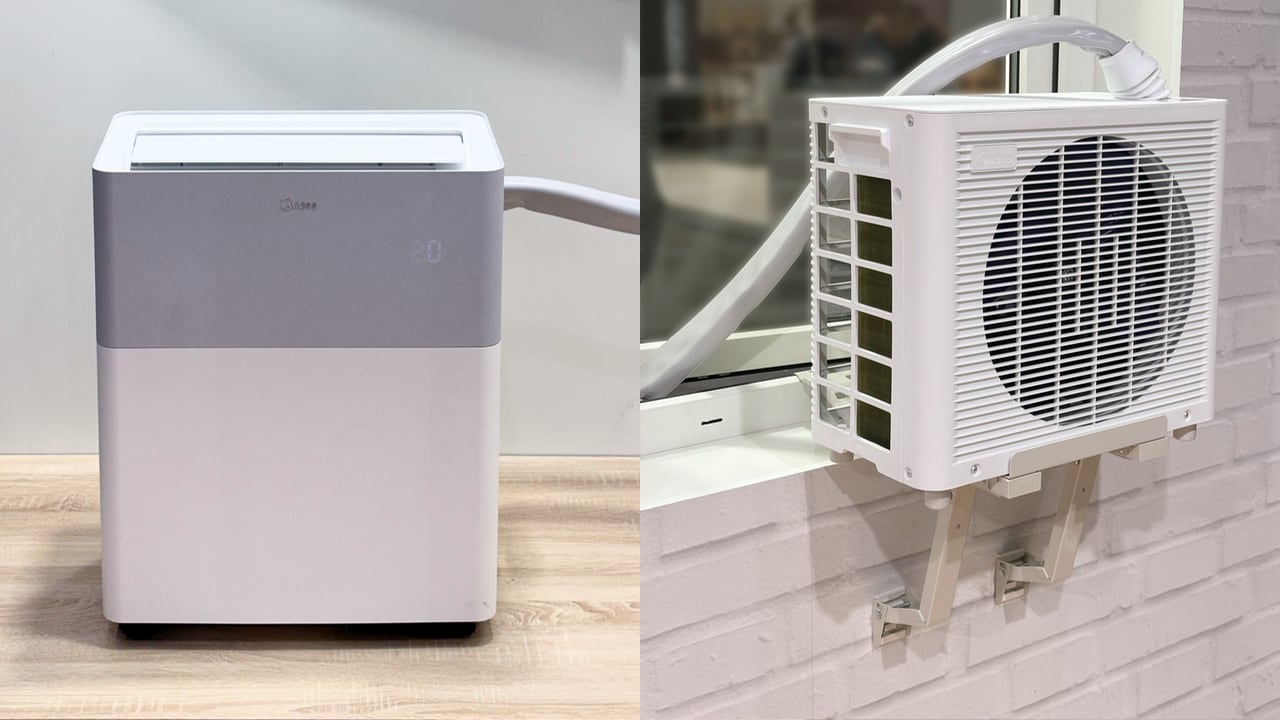
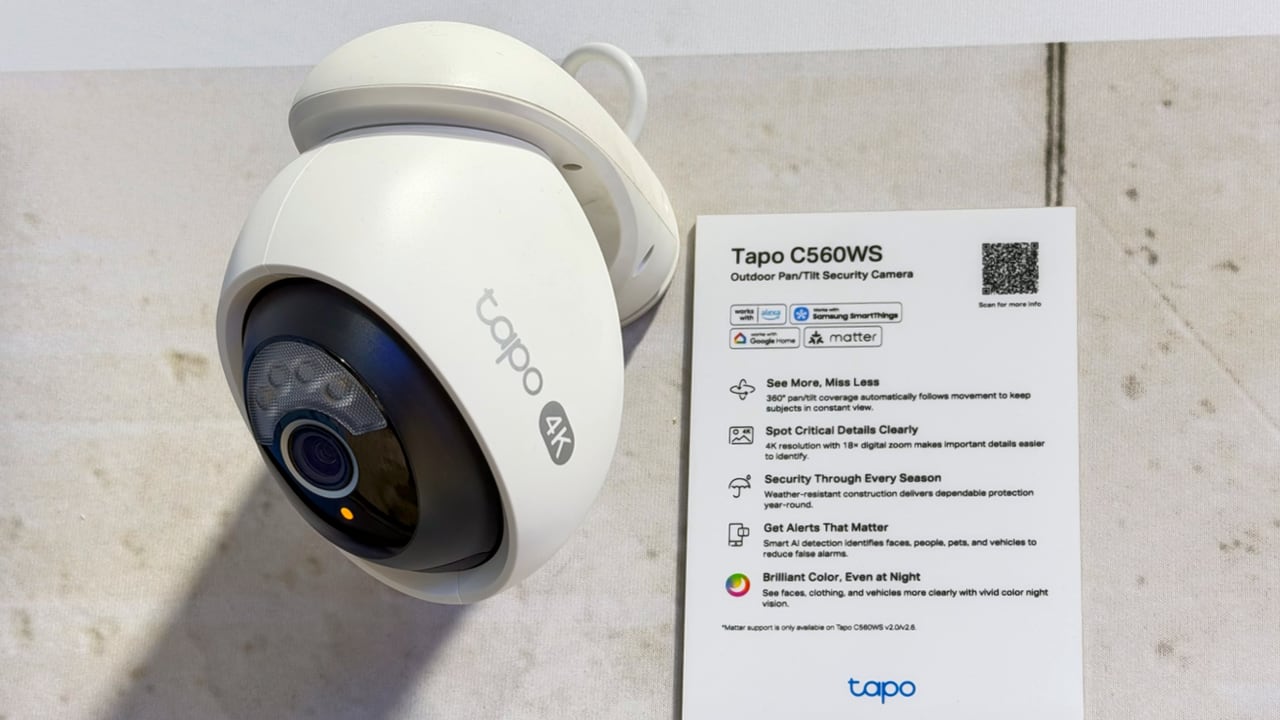
What stands out is that these companies are increasingly setting trends. Take Midea’s PortaSplit (link), for example. The bestselling air conditioner of the hot summer of 2026 was developed in Germany, but comes from a Chinese corporation. It will appear in a new version next year that supports the Matter standard. Aqara launched the world’s first Matter-certified camera. An outdoor model with solar cells and a base station (G510/M410) that also serves as a Matter Bridge is due to follow in 2027. TP-Link (link) announced three camera models at once: an updated version of its Tapo C260, the Tapo C560WS and the Tapo C660.
Dreo (link), which describes itself as a specialist in air management, plans to make its fans and air purifiers Matter-capable. It was not entirely clear at the show which of the countless robot vacuum models from Anker, Dreame, Ecovacs, Narwal, Roborock and SwitchBot are already compatible. The manufacturers’ communication on this front leaves much to be desired. However, I am aware of only one European robot vacuum brand that supports the standard: Bosch with its Spotless series.
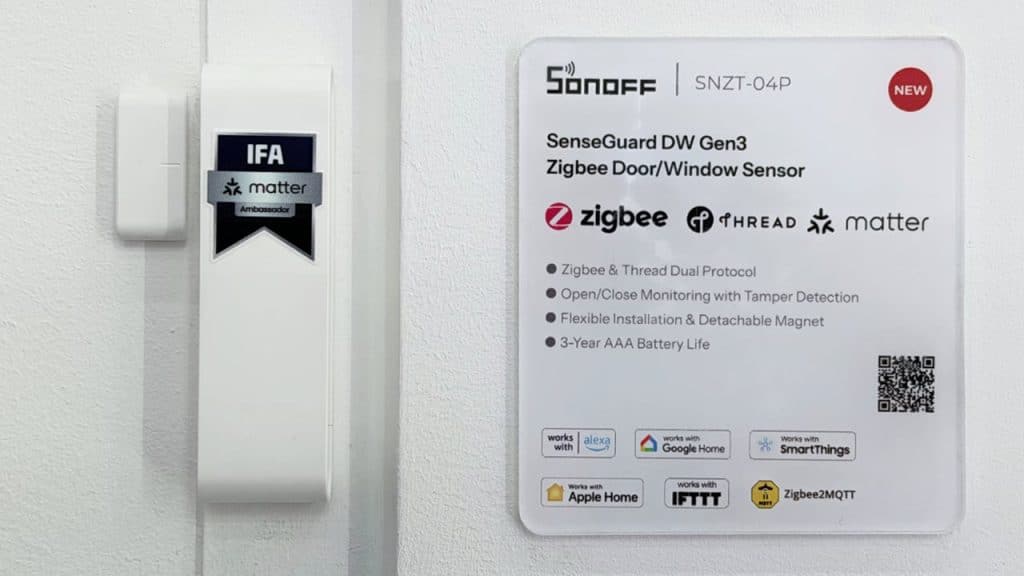
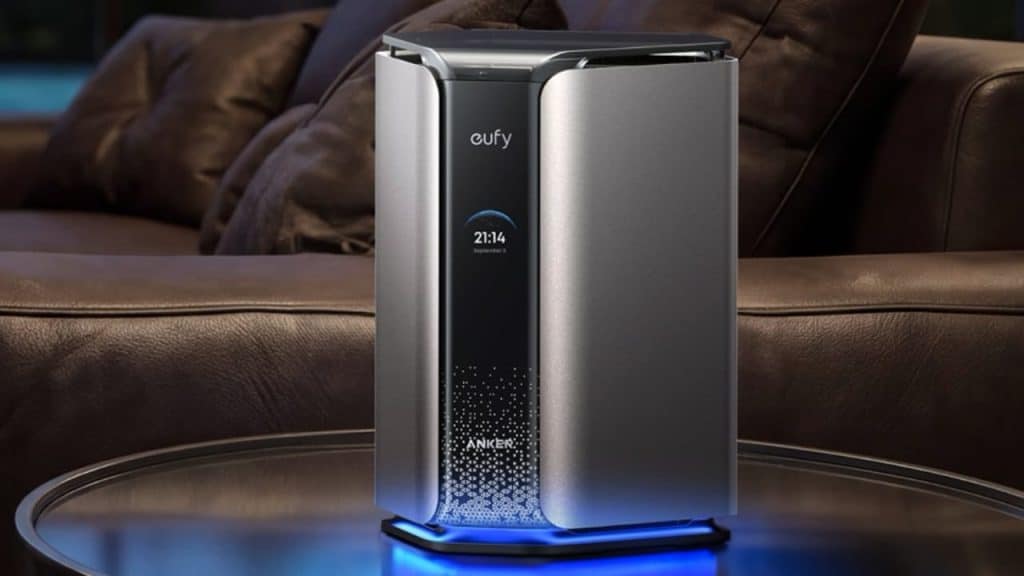
It was primarily Chinese firms that brought Matter into the spotlight. For example, with a special emblem that exhibitors affixed to their products. It read: ‘IFA Matter Ambassador’ – an ambassador for the standard. And as AI-driven smart home systems take households by storm in the coming years, companies from the People’s Republic want to be at the forefront. This is demonstrated by new products such as Ugreen’s HomeAgent – which also features a Matter controller. Anker recommends its MindBase for similar tasks: a powerful home storage device that catalogues video recordings, controls household appliances via Matter and manages energy consumption. Local AI – so the promise goes – makes users independent of cloud servers and expensive subscriptions.
What’s more, the combination of a rapid pace of innovation and an open (Matter) standard makes it easier for new providers to enter the market. Companies that already sell connected products – often using their own proprietary technology – have to defend them against the challengers. For example, lights with wireless dimming capabilities are nothing special anymore when more and more models enter the market with Matter built in as standard.
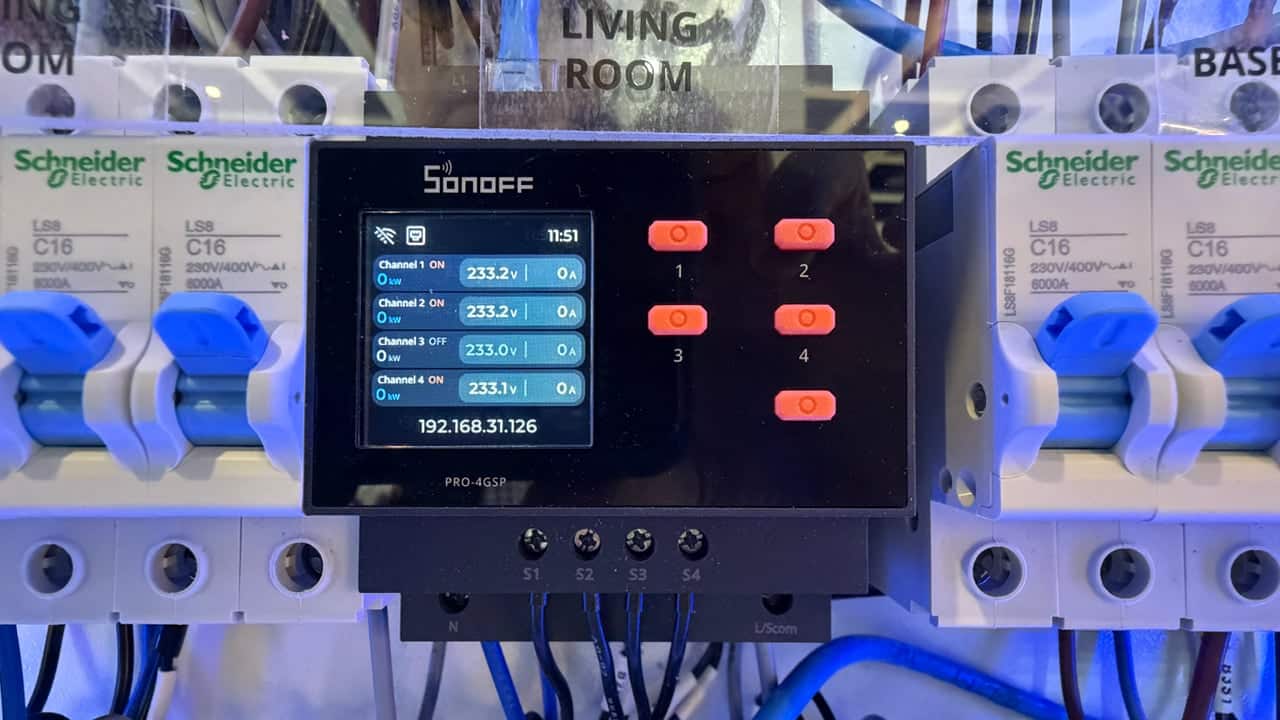
The same applies to thermostats, switches, and outlets. Chinese companies are slowly gaining a foothold even in traditional electrical installations. This was reflected in Berlin at the Aqara and Sonoff booths, where solutions for installation in distribution boxes on DIN rails were showcased. So the wind may have gone out of Matter’s sails for some manufacturers. But a new wind is blowing elsewhere – and it is unmistakably coming from the East.
Share this information: