UGREEN is preparing to enter the smart home market as a new provider. Ahead of IFA, the company announced its HomeAgent product family. It was unveiled on September 1, 2026, at a Smart Living event hosted in the U.S. and is now also on display in Berlin. The lineup consists of several control hubs designed to integrate both the manufacturer’s devices and third-party products.
The product line supports a range of standards, including Zigbee and the ONVIF (RTSP) streaming protocol, as well as Matter over Thread. Other wireless protocols, such as Bluetooth and Z-Wave, are also expected to be supported in the future. The company plans to provide more details in the fall, when the devices will become available for preorder as part of a crowdfunding campaign.
Where Does Ugreen Actually Come From?
Ugreen (link) is a Chinese consumer electronics brand. It is owned by Ugreen Group, which was founded in 2012 and is headquartered in Shenzhen. Starting out as a simple cable manufacturer, the company has evolved into a global provider of charging and connectivity solutions as well as NAS systems.
The company’s network-attached hard drives and storage systems are growing in popularity, thanks in part to their value for money. Ugreen is gaining market share in a segment dominated by industry leaders such as Synology and QNAP. Smart home products, however, have not yet been part of its portfolio.
HomeAgent: Three Control Units with Local AI
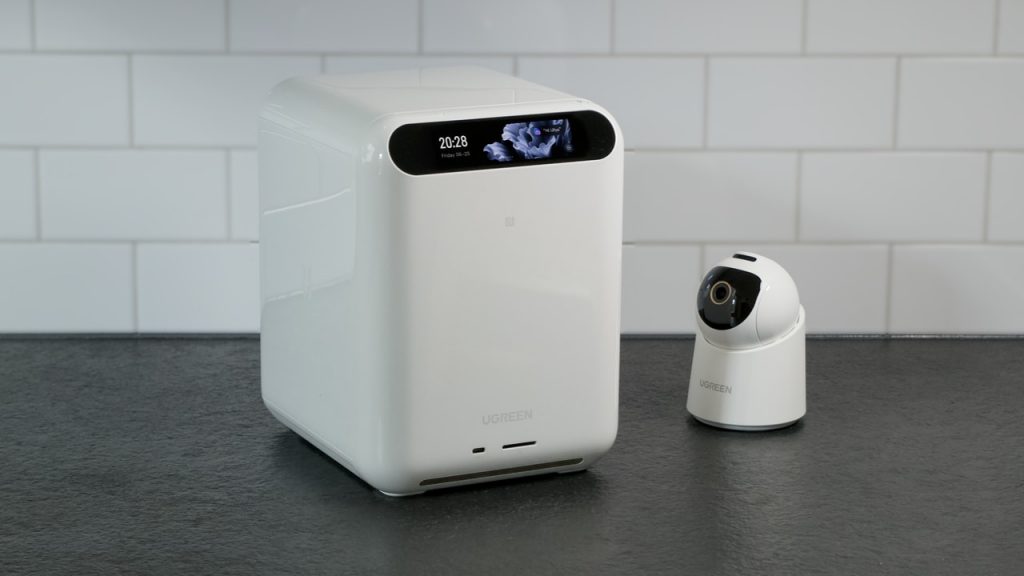
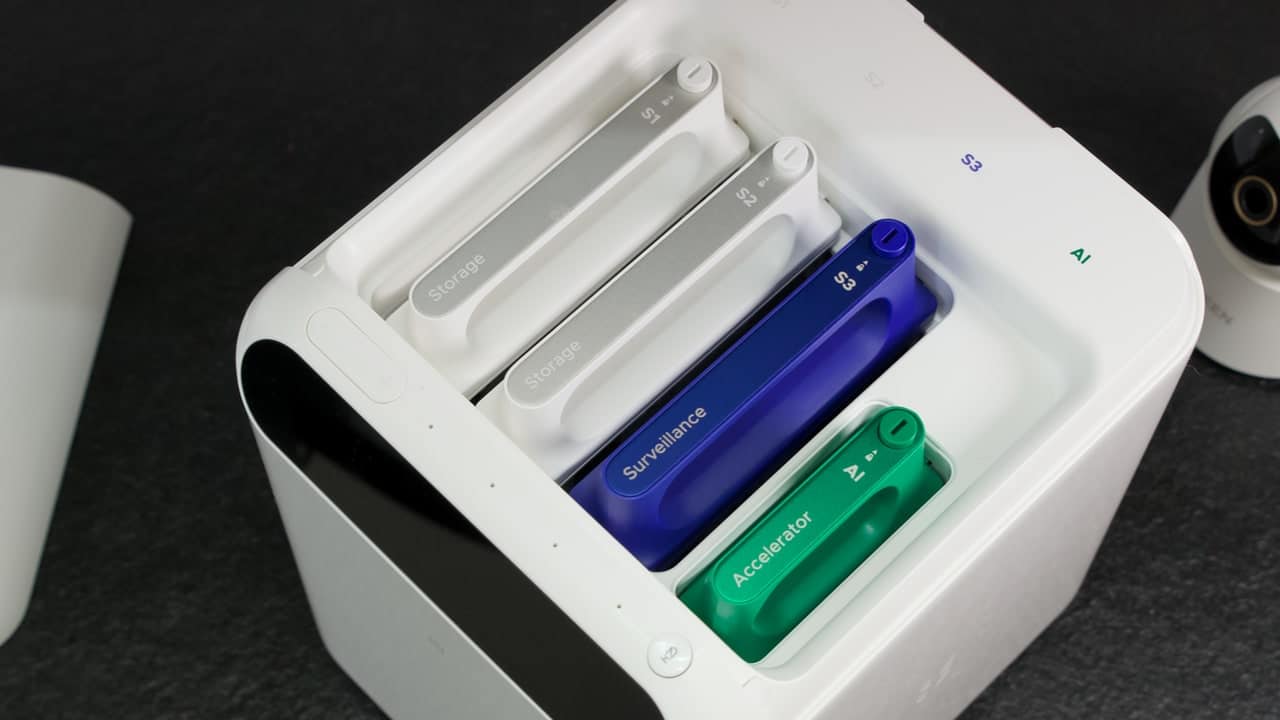
The new product line enters the smart home segment. It combines storage functions with home automation. At launch, it includes three models: HomeAgent HA100, HomeAgent HA100 Pro, and MasterAgent MA100. The cubic design is reminiscent of traditional NAS systems, enhanced with a color display located at the top edge of the housing. All three versions are designed to feature local data processing and offer varying levels of computing power.
The top-of-the-line model – the MasterAgent MA100 – is equipped with an AI computing unit from chip specialist Nvidia. Its processor module (Jetson Thor T5000) originates from robotics development and can run powerful, generative AI models. But even with the entry-level models, the HA100 and HA100 Pro, features such as camera image analysis are designed to take place entirely on-site at the hub – without a connection to the cloud.
With the system’s voice assistant – called Uliya – users can decide whether to use the (local) basic functionality or access advanced features from a data center. The chatbot, which is also available on new storage systems in Ugreen’s AI NAS series, is based on an integrated large language model (LLM). The goal: a voice-controlled solution for data storage, video surveillance, and home automation – all in a single box.
Around the HomeAgent hubs, Ugreen is building its own smart home ecosystem. Initial plans include indoor and outdoor cameras, a smart speaker for voice control from other rooms, and a digital photo frame with a color e-paper display. Features such as local AI-powered video analysis serve as key selling points. Thanks to cross-camera tracking, for example, strangers on the property can be monitored: the system compiles their movements from multiple camera feeds into a continuous timeline.
Matter Controller and Thread on Board
Of interest to fans of the Matter standard: The hubs are supposed to function as Matter Controllers and feature a built-in Thread Border Router. When it comes to device integration, however, Ugreen doesn’t rely solely on standards and technical specifications: There’s a compatibility list featuring products the manufacturer has tested itself. In addition to hard drives suitable for video and data storage, it also includes smart home products from providers such as Aqara, Eve Systems, Govee, and SwitchBot.
A kind of app store – called SkillHub – is designed to expand the systems’ functionality. Additionally, programmers can write their own extensions on Ugreen’s in-house developer platform. With this, the company is positioning the HomeAgent family as a potential alternative to established ecosystems such as Homey, SmartThings, or Home Assistant.
The coming months will show whether this initiative is successful. A Kickstarter campaign to pre-fund the first models is set to launch in October and run through the end of the year. Early-bird prices start at around $900 for the HA100 model and go up to $10,000 for the MasterAgent MA100 (link).
As with other memory-intensive products, steadily rising chip prices are likely to pose a challenge for price calculations. High-performance AI requires a lot of memory, and in the first quarter of 2026 alone, the cost of DRAM increased by around 80 percent compared with the previous quarter (link). Large-volume buyers of NVIDIA’s T5000 module, which is used in the MasterAgent, now have to pay about 67 percent more for the AI chip than they did when it was launched a year ago.
Share this information: