How large can a Thread network grow before it becomes unreliable and develops dead zones? This question arises at the latest when Matter is no longer used only in apartments and single-family homes but also in office buildings, hotels, and other commercial properties. Chip manufacturer Silicon Labs has now provided concrete figures on this. At the Connectivity Standards Alliance (CSA) Unify event (link) in Austin, Texas, the company presented the results of an in-house test.
One Office Building, 200 Mesh Nodes
For the project, Silicon Labs deployed a Matter over Thread network with 200 nodes throughout its office environment in Boston and operated the mesh over an extended period. The tests were explicitly conducted outside of laboratory conditions, in a real-world setting with active Wi-Fi, Bluetooth, and Thread traffic. According to the authors of the study, no special topology engineering – such as carefully planned placement of routers or devices – was required.
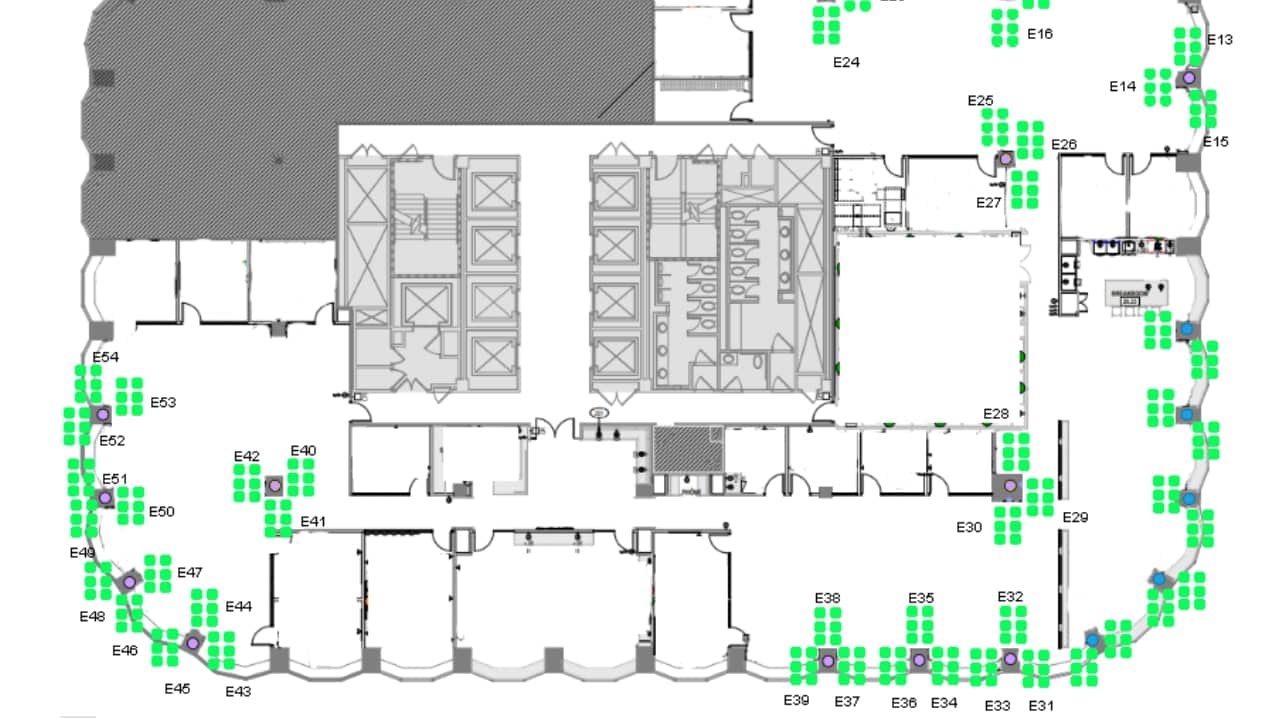
The network infrastructure utilized OpenThread Border Routers (OTBRs) from Silicon Labs, which connect Thread devices to IP networks and cloud services (see also “What is a Thread Border Router?”). All devices were successfully put into operation via on-network commissioning. In operation, their average multicast latency was 87 ms, and packet loss remained below one percent for most payload sizes – suitable for lighting control in commercial settings. Network outages were also absent during continuous operation under real-world radio traffic conditions.
Based on its findings, the company concludes that the technology is suitable for commercial applications. “This demonstrates that Matter-over-Thread can theoretically scale to thousands of devices,” said Daniel Cooley, Chief Technology Officer at Silicon Labs.
What This Means for Larger Installations
So far, Matter has primarily been associated with smart home applications – relatively small deployments with a limited number of devices. While the smart building standard KNX IoT will also rely on Thread in the future, practical experience with large-scale installations is still lacking. The SiLabs experiment aims to demonstrate that Thread is also suitable for typical commercial scenarios that have previously been covered by other protocols such as Zigbee.
The company highlights its Concurrent Multiprotocol (CMP, link) technology, which enables wireless chips to support multiple radio protocols simultaneously. For example, this allows Zigbee and Thread to be deployed in parallel, enabling device manufacturers also to migrate between standards. They can continue using their existing wireless technology while simultaneously preparing for the transition to a new ecosystem. The full test report is available on the Silicon Labs website (link).
Share this information: