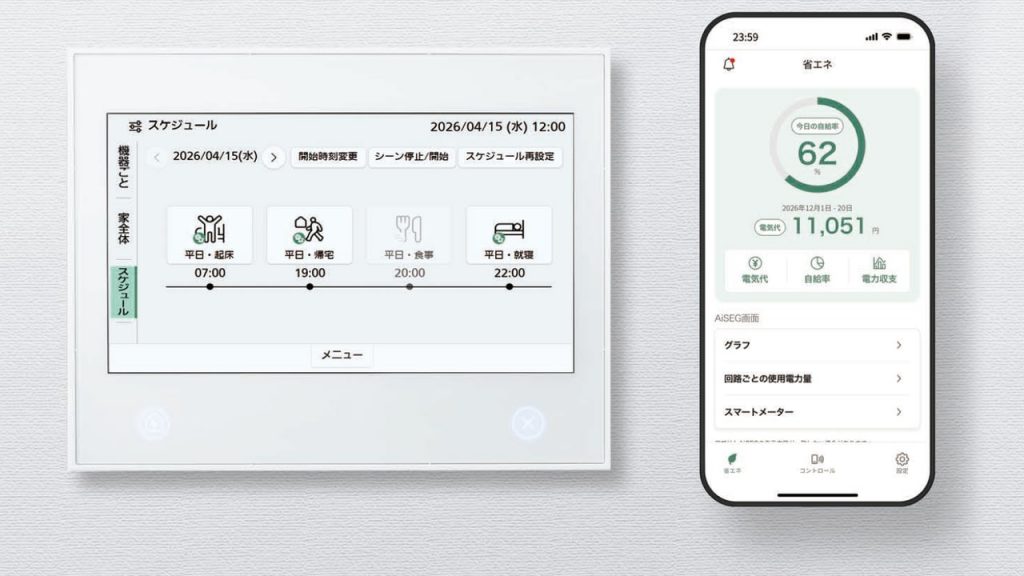
Panasonic Japan has announced a comprehensive software update for its Home Energy Management System (HEMS). The AiSEG3 touchscreen controller (link) will also receive a new app at the same time. A key element of the update is support for the Matter standard, which also enables local integration of smart speakers for voice control.
Local Connectivity and Reduced Cloud Dependence
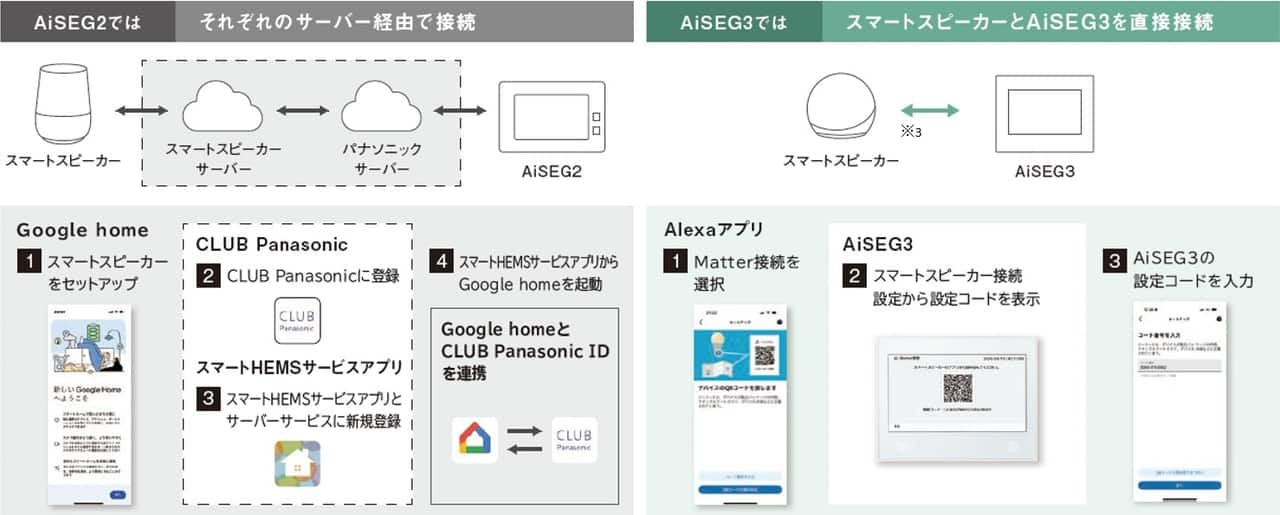
According to information provided by the company (link), voice assistants and external control systems have so far been connected primarily via cloud-to-cloud integration. The Matter update reduces this dependency, which should speed up the execution of commands and simplify the setup process. When it launches at the end of January 2026, it will initially support functions for air conditioning (mode and temperature selection), lighting (on/off), and air purifiers. The AiSEG3 has received certification for these clusters from the Connectivity Standards Alliance (link). It can thus serve as a Matter Bridge (“Aggregator”) pass on products from manufacturers that do not themselves support the smart home standard.
Broad Support for Air Conditioning Systems
Panasonic’s official HEMS compatibility list (link) mentions many brands and devices, particularly in the field of air conditioning systems. In addition to its own models, Panasonic also supports major Japanese competitors such as Daikin, Fujitsu General, Hitachi (now part of Bosch), Mitsubishi Electric, and Toshiba. In addition, there are heat pumps and water heaters, as well as PV systems and battery storage, even if categories are not currently passed on via Matter Bridge. They have been part of the standard since Matter 1.4, and the AiSEG3 control panel is certified according to this Matter version. However, it still lacks the corresponding clusters.
In addition, the selection of smart speakers at launch appears to be limited. Panasonic explicitly mentions Amazon models in its announcement. Google Home is not available. Whether this also applies to other Matter-compatible platforms with voice control – such as Apple Home or Samsung SmartThings – remains to be seen in practice.
Using Energy When Electricity Is Cheap
Another focus of the update responds to changing economic conditions for the use of solar energy in Japan. Since October 2025, a new two-stage feed-in model for electricity from photovoltaics, known as “FIT,” has been in effect there (link). The Panasonic system therefore controls the remuneration depending on the contract term: during the first four years after commissioning, feeding electricity into the grid is prioritized. After that, when compensation rates decline, the system aims to maximize self-consumption to improve profitability. This serves as an example of the growing importance of energy management solutions and the role that the Matter standard can play there in the future.
Share this information: