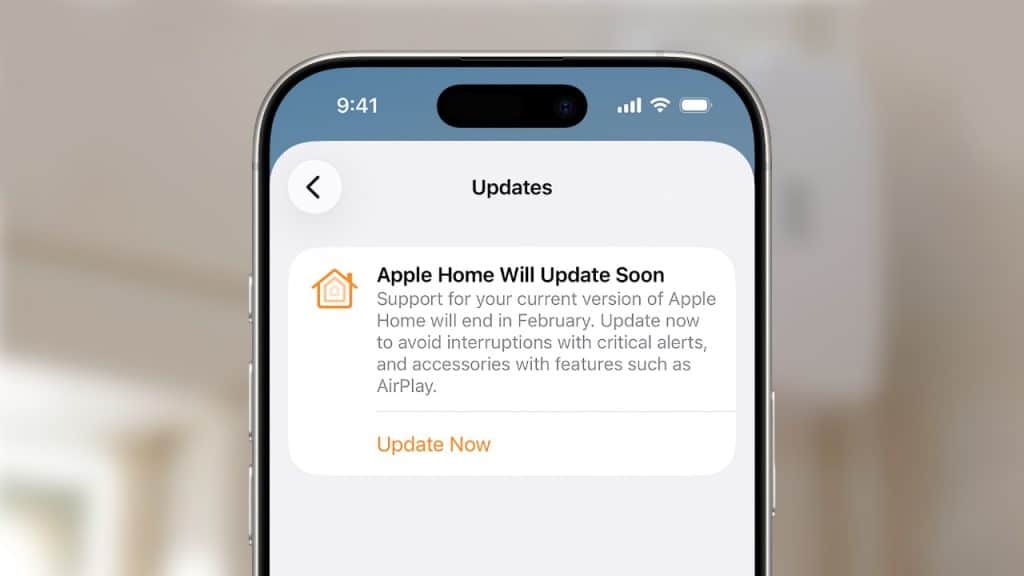
The days of Apple’s old HomeKit architecture are numbered: support for the software framework introduced with iOS 8 will officially end on February 10, 2026 (link). The company doesn’t put it quite so bluntly, but anyone who wants to control devices via Apple Home in the future will have to switch to the new architecture. This is not a cosmetic update but a fundamental overhaul – and there is an important reason for it: Matter.
Basis for Further Development of the Platform
Apple has been positioning Apple Home as a Matter Controller since 2022. However, the old HomeKit architecture is reaching its limits. It dates back to a time when Apple primarily served its own closed ecosystem. The new Home architecture was first introduced with iOS 16.2, withdrawn after problems arose, and later re-released with version 16.4.
Since then, two worlds have existed in parallel under the app interface. Users were able to postpone the switch – partly out of caution, partly because of incompatible devices or older Apple hardware. However, they then had to go without innovations such as guest access, activity history, or the integration of robot vacuum cleaners. In addition, there were repeated reports on the internet that Matter products were not reliably supported on the old platform.
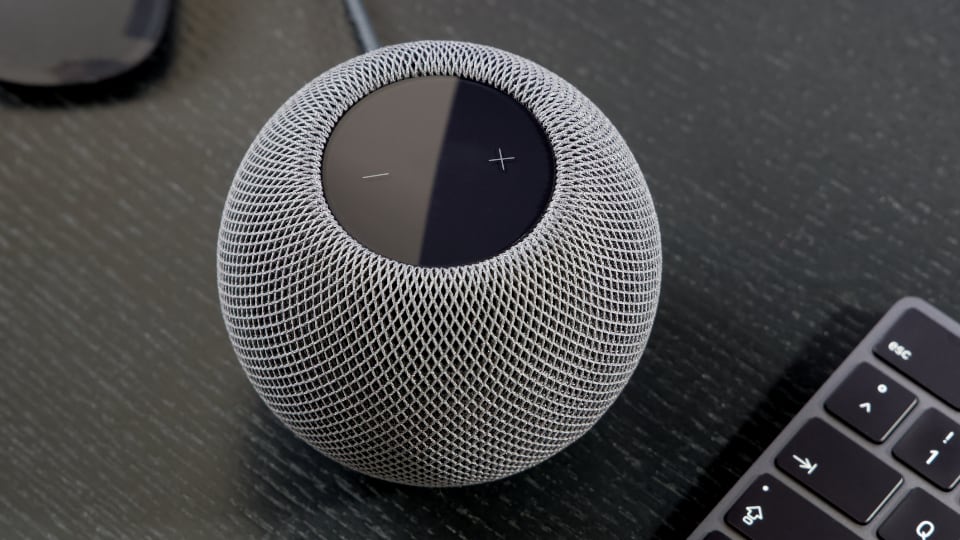
The era of coexistence is now coming to an end. Maintaining two software frameworks in parallel – plus Matter on top of that – would probably have become too costly in the long run. In addition, the new architecture shifts its logic to control centers such as Apple TV and HomePod. Previously, the iPhone and iPad were the main players. Every time the Home app was opened, they began to query the status of devices and synchronize it via iCloud.
In the new architecture, a control center (Apple TV or HomePod) takes care of all the work. This hub maintains a connection to all devices and knows their status in real time. This means that status queries, automations, and user rights run more consistently and are handled faster. The new architecture forms the basis for full Matter support – with multiple Border Routers, various Matter Bridges, and Multi-Admin setups.
Consequences for Existing Apple Households
The change affects the entire installation. All Apple devices involved must meet minimum operating system requirements (iOS/iPadOS 16.2, macOS 13.1, tvOS 16.2, etc.). In other words, older iPhones, iPads, or Macs that cannot be updated will lose access to Apple Home. It is not possible to revert to the old solution; the change is permanent.
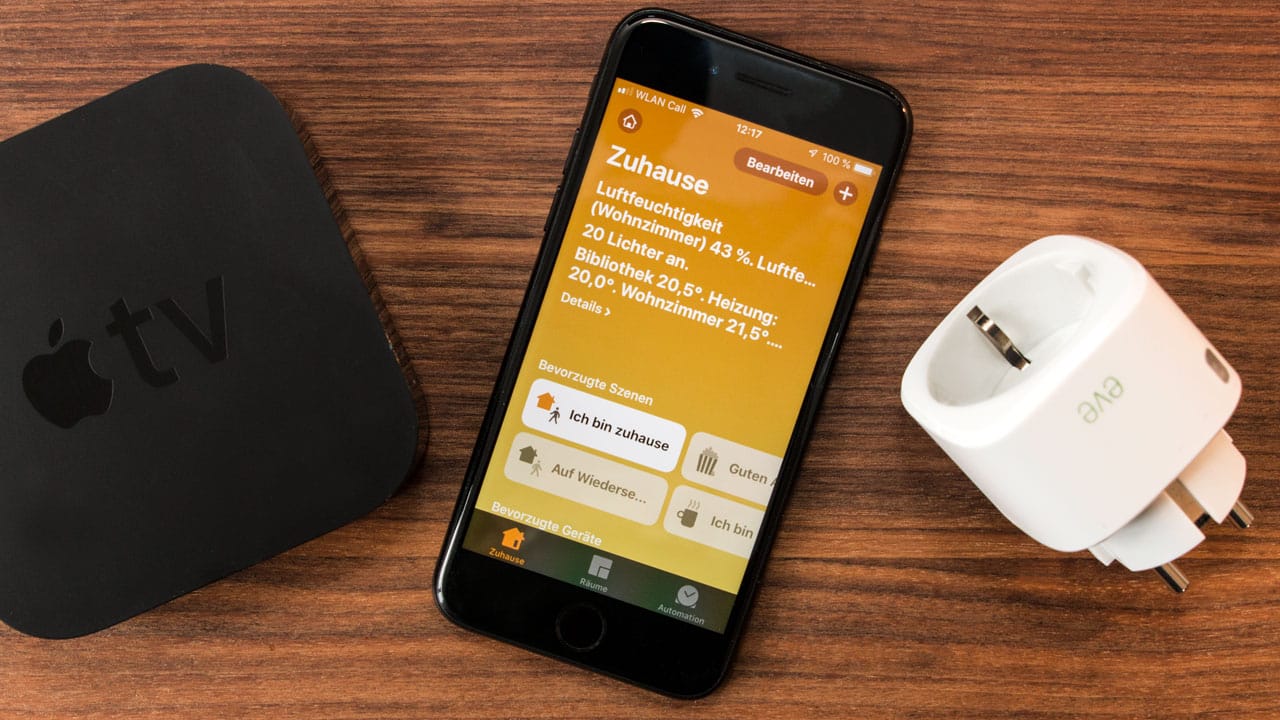
According to a support document (link), the update may be performed automatically on February 10. If not, the update can also be triggered manually in the Home app. The prompt for this appears under Updates in the Home app settings (large image above).
As a result, Apple’s ecosystem will be less backward compatible but also more future-proof. Anyone who wants to continue using the platform will have to go along with the change. Many users are likely to associate this with a hope that future development will proceed more quickly and new product categories will be added faster. Compared to pioneers such as Samsung SmartThings or Home Assistant, the Apple platform is lagging significantly behind in this respect.
Share this information: