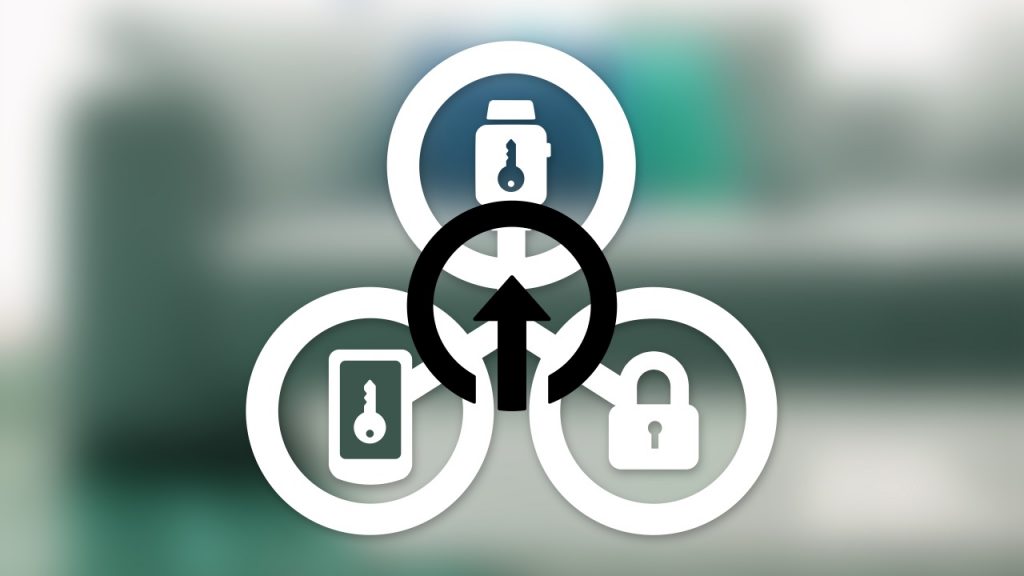
Aliro (link), developed by the Connectivity Standards Alliance (CSA), is an open specification designed to standardize access control. In simplified terms, it can be described as “Matter for digital door keys.” While Matter ensures that smart home devices can communicate with each other within a network (“Turn on the light” or “Is the door locked?”), Aliro aims to standardize communication between keys and locks.
So far, proprietary ecosystems have dominated the market. Solutions such as Apple Home Key or manufacturer-specific Bluetooth apps tie users to tightly coupled hardware-software combinations. With the “Aliro Communication Protocol,” the CSA has been developing an open specification since 2023 that acts as a universal interface between the digital key (credential) on a smartphone or wearable device and the receiver on the lock.
Technical Approach and Transmission
Unlike purely software-based solutions, Aliro defines both the data format of credentials and the physical transmission methods. The standard relies on a combination of three established wireless technologies to cover a wide range of use cases:
- NFC (Near Field Communication): Serves as the basis for access control by holding the device directly up to the reader. A key advantage of NFC integration is that it does not require a power supply. When properly implemented in a smartphone, NFC also works with an empty battery.
- BLE (Bluetooth Low Energy): Primarily used for initial communication and authentication as the user approaches the locking system.
- UWB (Ultra-Wideband): Enables precise spatial positioning. Using distance measurement (ranging), UWB enables secure “hands-free” opening, as the lock can detect whether the user is directly in front of the door or not. This effectively prevents so-called relay attacks, in which radio signals are extended to open the door without authorization.
It is important to distinguish between Aliro and Matter. Both are managed by the same organization (CSA), but they have different jobs. Matter is, in a sense, the caretaker. It handles administration and control: “Door closed?”, “Lock the door at 10 p.m.”, “Battery level low.” For this purpose, Matter communicates via an existing IP network (Wi-Fi or Thread). The Aliro standard replaces the doorman. It checks access authorization: “Is this person allowed in?” This communication takes place directly between the phone and the lock (point-to-point), without Wi-Fi or a hub. For remote access or the management of access data, however, other systems such as Matter platforms may come into play.
A future-ready smart lock will therefore carry both logos on the box: Matter for integration into automations and Aliro to ensure that residents and guests can gain access using virtually any smartphone.
Broad Industry Support
The list of supporters reads like a who’s who of the tech industry. Apple, Google, and Samsung are involved, as are security specialists such as Allegion (Axa, Briton, Falcon, Schlage, SimonsVoss) and Assa Abloy (Yale). This signals that proprietary solutions like Apple Home Key could eventually converge into Aliro or use it as their technical foundation.
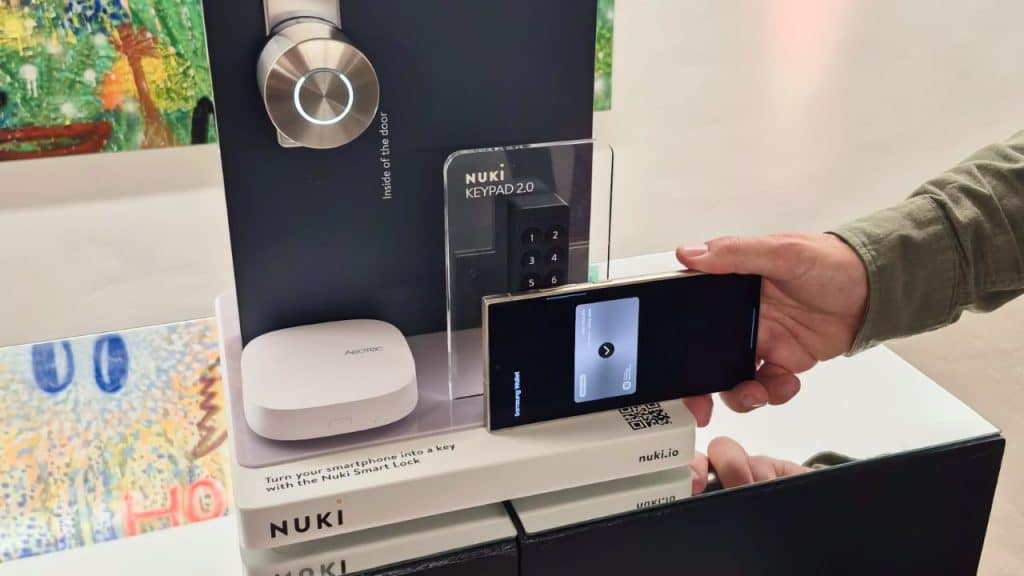
The specifications for Aliro 1.0 were published in February 2026. Manufacturers can now also have locks and readers certified.. Once released, manufacturers will be able to certify their first locks and readers. At CES 2026, companies such as Aqara, SwitchBot and Xthings (Uniloq) announced initial smart locks that are expected to be Aliro-compatible. Nuki had already demonstrated a prototype at IFA 2025 in Berlin.
Share this information: